


A billion dollars is a weapon of mass destruction and must be regulated as such.
“But the reality has been far different. Last year, three of Starship’s five launches exploded at unexpected points on their flight paths, twice raining flaming debris over congested commercial airways and disrupting flights. And while no aircraft collided with rocket parts, pilots were forced to scramble for safety.” —Heather Vogell and Agnel Philip, with graphics by Lucas Waldron



Talent on loan from God.
Really looking forward to the day I manage to think about Charlie Kirk as often as I think about, ah, that other guy. Also a prick. Also dead.
For a good return you gotta go bettin on chance—and then you’re back with anarchy.
Just so we’re all clear: the City of Portland is removing protections legally applied and mandated by law in an attempt to prevent the utterly and thoroughly illegal rescission of three hundred and fifty million dollars’ worth of federal funding, legally allocated by the duly elected representatives of the people who put up the funds, all because no one can afford the amount of time it would take for the wheels of justice to slowly grind their way to finding precisely that illegality and impotently enjoining what’s already been rescinded until such time as the Supreme Court throws out any such exceeding fine work without explanation from the illegible gloom of the shadow docket, but—but! Having done so, the entire city must now spend the rest of the year, the term, the reich huddled quietly in a corner hoping this will all be enough, but it’s never enough, and anyway if at any later point we happen across his mind in the slightest slantwise fashion he’ll just take it all again, and more besides, and what will we give up next?
Better late than—
“Three years later, Portland’s chief of police did something unusual: He acknowledged harm caused by the Bureau’s inaccurate and incomplete press releases, and apologized.” —DEFUND is but the moderate position; truth and reconciliation nationwide are the measured response. Abolish the police before it is too late.
Cui bono?
“Overall, I think there’s quite a bit of abdication of responsibility around what we are going to do as people’s jobs start being taken fairly aggressively. Luckily, there’s a massive population drop coming. So maybe everything is just fate and it’s gonna work out okay.” —Grimes, or c, or Claire Elise Boucher
Metropolitan boomerang.
It suddenly occurred to me, what it was that’s been niggling at the back of my brain, as I’m reading about the 150-year-olds drawing Social Security, and the Are You Alive project, the blithe destruction of unutterably necessary public goods, laboriously built over painstaking generations, depended upon by hundreds of millions, including, yes, themselves—even that bedrock gospel of revanchists, that all the fierce resistance they’re (finally) facing, now that they’ve taken their masks off, in the town halls, outside all those Tesla dealerships, that all of it must be astroturfed, fake, bought and paid for with bottomless Soros funds, how could there possibly, after all, we won! We finally won! We have a mandate! The mandate! —What’s been bugging me, trying to surface itself in and amongst all this, turns out to have been the memory of something it was that Donald Rumsfeld, long may he burn, once said, on the occasion of our second Bush-led invasion of Iraq:
The images you are seeing on television you are seeing over, and over, and over, and it’s the same picture of some person walking out of some building with a vase, and you see it 20 times, and you think, “My goodness, were there that many vases? Is it possible that there were that many vases in the whole country?”
If one saves a single life, it’s as if one saves an entire world, as the mishnah goes, but the worlds of the lives of these right-wingers, these Dogists, these Trumpists and Seven-Mountaineers, these Republicans, they’re so bounded, so ruthlessly efficient so as to maximize the return on their investments, so thereby solipsistically incurious, and thus so very, very small, that there’s just no room left in them to contemplate the notion at all of the possibility of three hundred and forty-one million, five hundred and thirty-eight thousand, three hundred and fifty-nine others, each their own entire utterly other world—despite the fact the tools they now have at their disposal allow them to reach out and wreck each and every one, at scale.
The neat thing about cryptographic government (which is actually much easier than it sounds—we’re talking a few thousand lines of code, max) is that it can be connected directly to the sovcorp’s second line of defense: a cryptographically-controlled military.
A few thousand lines of code. —My goodness, are there that many people? Is it possible there are that many people in the whole country?
A Critique of Pure Tolerance.
This, then, is their target; this their priority; this is what terrifies them, beyond all reason:
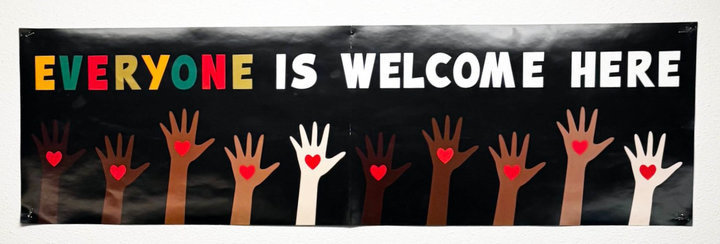
West Ada School District administrators have instructed a teacher that she must remove two signs from her classroom out of concern that they “inadvertently create division or controversy,” the district told the Idaho Statesman.
[…]
Inama told the Statesman that she was particularly confused because administrators had hung signs across the school with a similar message that read, “Welcome others and embrace diversity.”
When discussing the “Everyone is welcome here” sign, the district told the Statesman that it was not the message that was at issue, but rather the hands of different skin tones on the poster.
It’s—impressive?—that, in their eagerness to justify such an unjustifiable position, the district eagerly trips into full-throated racism (they actually said, “While ‘Everyone is welcome here’ is a general statement of being welcoming, concerns arose around the specific visual presentation of the signs in question and whether they aligned with district policies on classroom displays,” but look at that poster up there: the only thing specific as to the visual presentation is, in fact, those differing skin tones; the Oregonian drew the correct inference)— but look at the other poster they demanded be torn down, over there: what, specifically, is there, visually, to take issue with, about the presentation of that?
It’s not the presentation at all. It’s the message. —There are those in this world who do not believe that everyone is welcome here, or important, or accepted, or respected, or valued, or equal; seeing posters every day that insist otherwise is, if not an open insult, then at least a constant irritation; such individuals will, ironically enough, not feel welcome in a room displaying messages of such a universal welcome; their anodyne naïveté, rendered logically impossible, becomes offensive, and so must be removed.
This ineluctable logic has proven implacably useful to revanchist griefers: we can all agree that everyone should be welcome (thing about what’s anodyne? Everyone likes it); therefore, anything that might make anyone feel unwelcome ought to be minimized, ostracized, erased: anything, then, that might make, say, someone invested in the notion that this nation was once great, someone who might, perhaps, be distressed, by the notion that such greatness depended on horrible crimes and terrible wrongs, such a one must never be confronted with any evidence to the contrary, lest they feel themselves unwelcome, and so. And it works the other way, as well: any inkling that the world might be however slightly improved, made even an inch more great than it is at this moment, now, here, is a notion that this world is not already great, is not already good, thus risking the discomfort of those who think it was, it is, it always must have been, and since that would make them feel unwelcome—well. Minimize. Ostracize. Erase. —This dynamic explains so much of what’s happening, of late, from the destruction of science to the demolition of libraries to the denial of vaccinations: to suggest this world might somehow be improved is to deny it’s not already, has not always been, in how it’s arranged and disposed, is not yet great, has never been the best of all possible, which would make those so invested feel—unwelcome. And so.
—I mean, it’s also the racism, and the misogyny, the viciously violent, hideous hate. But note the nasty illogic demanded, the repellant claims that must be made, the futures that are foreclosed, whole worlds of possibility destroyed, unmade, to satisfy these terrible, stupid demands.
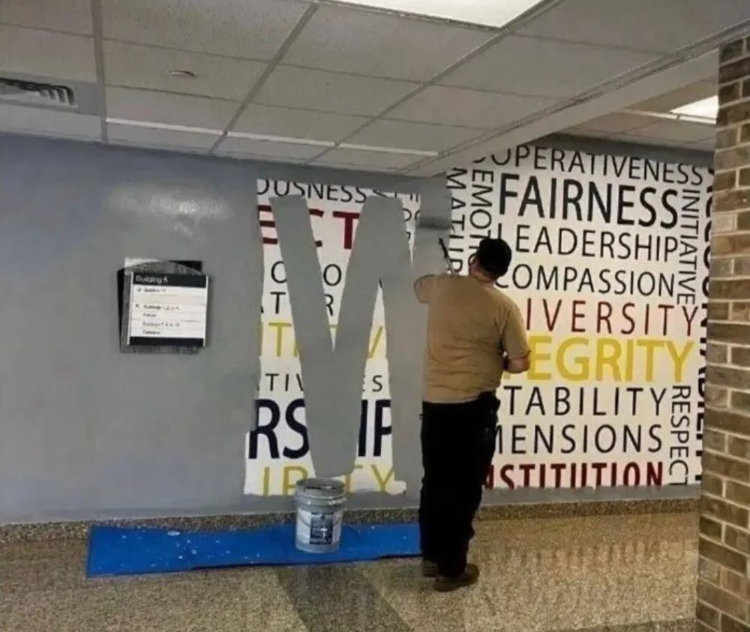
The stakes is high.
The camps were pitched long ago, human joy and possibility set against terrified segregationists and eugenicists, but they’ve gone and anted up: anyone who needs medication to get through this thing called life, we’re told, is “a dire threat to the American people and our way of life.” Add them, then, to the lists of anyone trans, queer, not what we’re calling white at the moment, heck, that’s just about me & you & everyone we know. —This won’t end easy. It will take a lot to shame them into hiding away their hate again. Deny this unhumaning; defend yourself, ourselves, our way of life; depose these neo-Nazis, these Christian nationalists, these Republicans, into their fated ditches.
#nodads jokes.
The thing, about Elon Musk’s inability to effectively deploy, or even, seemingly, to enjoy, humor:

He’s not trying to be funny, per se. It’s a show of power, not unlike stupidity: I can say anything, anything at all, he’s saying, and so long as it’s approximately humor-shaped, so long as it appears to be somewhere in the vague neighborhood of a joke, thousands upon thousands of people will laugh, because it was said by me.
This, of course, would be the actual function, the purpose, of dad jokes: because I am the patriarch, my jokes do not actually have to be funny to get you to react to them. But the thing about dad jokes is they’re almost always told with an awareness of and even an embarrassment at that purpose, even if it never manages to be articulated as such—there’s almost always an ironic detachment in the telling of them, and a knowing, groaning performance of disgust in the response.
But of course, Musk is a genius of this brave new age, and has no time for such niceties as reflection, or self-consciousness. Say the thing; bask. Open. Brazen. Naked. Ding an sich.
The sin of empathy.
“Do not commit the sin of empathy,” he exhorts us, this mustachio’d Utahan; “This snake” (referring to a photograph of the Right Reverend Mariann Edgar Budde)—
This snake is God’s enemy and yours too. She hates God and His people. You need to properly hate in response.
She is not merely deceived but is a deceiver. Your eye shall not pity.
As a bit of bait, his exhortation did the trick: ten thousand replies, ten thousand retweets, four point seven thousand likes, two and a half thousand bookmarks, twenty-one point nine million views, as of this morning, to the extent those numbers mean anything anymore. And certainly, I now know far more about Ben Garrett, Deacon, candidate for Elder, and podcast co-host, than I ever would’ve intended otherwise. Screenshots have washed up at Bluesky, racking up thousands of likes and retweets of their own; people will gawk at the Nazi bar’s grafitti. “Commit the sin of empathy,” these pass-alongs exhort in turn. “It’s actually the most important emotion of all.” “If your religion says ‘Do not commit the sin of empathy’ you chose the wrong religion.” “Google search ‘The Sin of Empathy’ and you’ll see Evangelicals using it unironically.” “Probably time to talk about fascism and moral inversion huh.” —Which, leaving aside for the moment the all-too-real shortcomings of dunk culture, is all well and good—fuck him up socrates, as Darryl once said—except, I mean, for one fundamental flaw—
Empathy is a sin.
Oh, not the way he means it, this aspiring patriarch, this amateur demonologist. He’s a misogynist fascist, lashing out at a woman in a position of traditionally male power, a woman who’d recently dared to embarrass his chosen Daddy-come-home figurehead by asking the President to have mercy. —It’s important to note that Deacon Garrett isn’t responding directly to anything the Right Reverend Budde said, with his exhortation not to commit the sin of empathy—she spoke of unity, dignity, honesty, humility, diversity, and of course and most controversially mercy, but said nothing of empathy: the closest she gets to that is compassion. —No; his interest in warding us off empathy is purely instrumental. He’s only here to gin up his outsourced two minutes of hate against a designated target. Empathy makes it harder to hate, and so it must be done away with. Your eye shall not pity.
When pressed on his echthroic ethic—how can empathy be a sin?—Garrett directs his audience to the writings of Dr. Joel Rigney, ex-president of a seminary and devotee of Idaho pastor Doug Wilson. Rigney’s been a Main Character before, for precisely his writings on empathy, and compassion: cod-Letters from an ersatz Screwtape on how best to twist these supposed virtues from the Enemy’s loathsomely benevolent purpose. —Rigney posits empathy as a totalizing perversion of compassion, a complete immersion in the feelings of others that overwhelms one’s own judgment, one’s fundamental sense of right, and wrong, one’s very self, a feeling-with fusion that terrifies his puerilely pathetic individualism: thus, a sin.
He, of course, has it all completely and utterly backwards.
Namwali Serpell, writing about the shortfalls of empathy as a saving grace of literature, has much more interesting insights into what might be sinful about it all. She quotes a passage from Remainder, by Tom McCarthy, in which the narrator hires two black men to shoot at him with blanks, re-enacting the murder of a black man with which he’s become, shall we say, obsessed:
My two assassins took their time in killing me. The slowed-down pace at which they raised and fired their guns, the lack of concern or interest this seemed to imply, the total absence on my part of any attempt to escape although I had plenty of time to do so—all these made our actions passive. We weren’t doing them: they were being done. The guns were being fired, I was being hit, being returned to the ground. The ground’s surface was neutral—neither warm nor cold… When I let my head roll slightly back, a bollard hid all these words except for one of the two Escapes. Would my man have seen this, just before the life dribbled out of him towards the puddle? Escape?
and then uses it to question the utility, the very purpose of empathy:
The possessives, “my two assassins” and “my man”; the conscription into a willful passivity; the mechanical quality of the sequence, absent of concern or interest or survival instinct; the supposed neutrality of the usurped ground; the ironized “Escape”: Isn’t this creepy, fugue-like occupation of the dead a truer picture of contemporary empathy than the older cliché of walking a mile in another’s shoes?
The fact that it’s a rich white man taking a poor black man’s death for a spin is no coincidence. The empathy model of art can bleed too easily into the relishing of suffering by those who are safe from it. It’s a gateway drug to white saviorism, with its familiar blend of propaganda, pornography, and paternalism. It’s an emotional palliative that distracts us from real inequities, on the page and on screen, to say nothing of our actual lives. And it has imposed upon readers and viewers the idea that they can and ought to use art to inhabit others, especially the marginalized.
The sin of empathy, then, is not that one will lose oneself, and the crucially God-given sense of right and wrong one would impose on some other, by indulging the notion that one ought try to feel the feelings of that other—it’s that one’s imagined sense of those feelings, licensed by the indulgent term of empathy, risks overwriting the actual feelings and experiences of that other. —Unless tempered, by experience, by some of those other virtues mentioned above, humility, honesty, dignity, mercy, then empathy all too easily slips over the brink into something one might well call sin.
How it’s going.
I’m trying not to borrow grief from the future, as the saying advises, but the terms are so damn attractive.
These six things doth the LORD hate, yea, seven are an abomination unto Him:
I am telling you once more how zealously I look forward to and actively hurry down the day when all this echthroic crypto-Christofascist lot are left face down, rhetorically speaking, in their metaphorically burnt-out bunkers and political ditches, and a whole generation and yet another after them shame-facedly insists they never meant for anything like that, even as they pointedly refuse to name any of their children Donald, or Chaya, or Ryan, or Oklahoma State Senator Tom Woods, R-Westville, hateful bigot.
Which side you are on.
So this piece has rather deservedly become an instant classic, up there in the pantheon of speaking truth to bullshit with God’s grief-stricken press conference, or the only country where this regularly happens, but there’s nonetheless a moment’s hesitation before you recommend it, or there ought to be: in inhabiting that hateful rhetoric so completely as to so convincingly ape it with which whatever purity of motive is to risk reifying precisely that horrible hate—satire cannot be failed; it can only fail. —No, some things are so vilely hateful, some contexts are so overwhelmingly unbalanced, even the slightest chance of failure can’t be risked. Sometimes what you absolutely need is the cold clear righteously vicious opposite. —To the barricades, motherfuckers. You will lose.
& yet—
Mean-spirited cracks at the Former Guy hit different now that every mention of his name really ought to be preceded by the words “genocidal stooge.” —He’s not doing anything, of course, just scampering up to the front of a bunch of people already sort of headed in that general direction, but that’s much, much more terrifying. I want so much for us all to skip straight to the bit where the folks at the head of that bunch are all face down in their respective ditches or burned-out bunkers, and a whole generation shame-facedly insists they never meant for anything like that as they quietly fail to name their children Donald, or Ronald, or Tucker, or Chaya—but without all the immiseration and deprivation and violence and death, and all of us here today can just get back to living our lives as we are, you know?
Even the bull puts in some effort.
This piece—pleasant, but slight, ending just as it feels like it’s run through the pre-flight check for a much longer trip—does, at least (as it two-steps from of all things Paper Moon to the 48 Laws of Power), manage to articulate an essential, implacable truth of the Age in Which We’ve Found Ourselves Deposited: how on earth is it possible to speak as we so often do of Donald J. Trump as a grifter, when he can’t even be bothered to begin to pretend to try?
Power in power is power in power.
Money in politics is speech. Speech about money in politics is not speech.
The cause is you, Mr. and Mrs. Yesterday, you, with your forked tongues.
I really gotta stop eavesdropping on the hellsite. If I did, I’d never have to deal with the tsuris stirred up by this centrist jackass, who’s anyways never not on his bullshit:
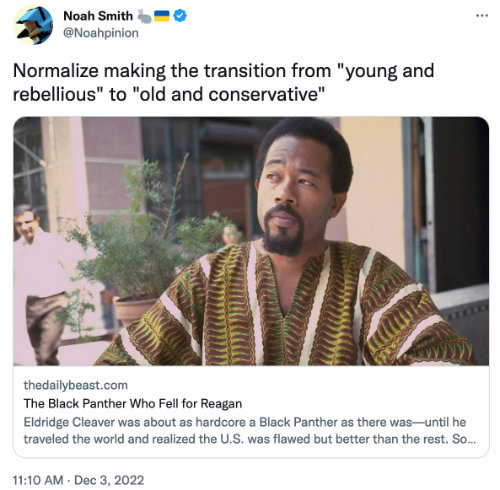
And oh, he goes ahead and walks it all back with another tweet, oh, I don’t mean denying climate change, or going antivax, or denying the results of any elections, or standing up for antisemitism, or believing anyone in Hollywood is a pedophilic monster, no no, and we can all agree that these are all the basic benchmarks of being a basically decent human being, and Lord knows we’d all like to get older without losing our decency. But of course what this centrist jackass neglects to mention is his shining example of why it’s okay didn’t only hobnob with Reagan when things got to the point that they got, but also with Jerry Falwell and Pat Robertson and Jim Bakker and but also John Birch Society conspiracy-monger Wllard Cleon Skousen, which is exactly and precisely how you fucking get to antivax and antisemitism and denying elections and terminating the fucking Constitution and believing Comet Ping Pong has a goddamn fucking basement. —But we don’t even have to do that much barely minimal research: this centrist jackass’s okay point that he wants to fucking normalize is betraying everything you ever said you stood for to support Ronald God damn Reagan, the singular fucking Jonbar hinge that swung us all of us, every one, from everything we could’ve maybe might’ve had to what we’re fucking stuck with now.
Ronald fucking Reagan.
It’s a poisonously seductive notion, that we must become more conservative as we age, that as we acquire things, stuff, stability, position, power, privilege, we must necessarily crouch and grasp to hold, maintain, conserve. Because we can, we might, we should also acquire knowledge, perspective, empathy, experience, possibility, as we get older, all of which, each of which, militates against conservatism qua fucking Ronald fucking Reagan fucking conservatism.
So, I mean, basically, fuck this centrist jackass, is my point.