

Sacramento Morty’s.
You’ve been following along with Dylan Meconis’s daily Danse Macabre sketches? If not, go on: catch up. —Now. Turns out, this one?

It was specifically commissioned by the Spouse. For me.
I know a provocation when I see one.



Reason, season.
MetaFilter is, well, it’s an online community, and all that that implies. —In addition to engaging linkspam and stimulating discussion, its members occasionally make real actual physical stuff; every year, links to venues where such stuff might be examined and purchased are gathered in the MeFi Mall (aka ShopMe)—which I hereby commend to your attention, for your varied holiday gifty crafty shopping needs.
What we talk about when we talk about what we’re pointing to.
Urban fantasy as a subgenre usually has a little bit of hard-boiled noir action going on, blending fantasy with the elements of a modern crime story. Here’s a body, in other words, or some other horrible atrocity, and now here’s a hero/heroine with a special magical doodad/heritage who’s going to avenge/solve the crime. That’s the super-duper simple version, and the umbrella term can cover much more, of course…but that should get you started.
So, I am finishing up writing and polishing a YA novel that I thought was UF. But now I’m starting to think it’s not. By strict definition, it is. The MC and fairies having adventures around London. But as a marketing category, it seems like UF might not really work.
Under normal circumstances, it would be considered a straightforward Urban Fantasy/paranormal romance: independent, capable woman pits herself against the supernatural, meets up with mysterious wizard with dark powers and great cheekbones, and sparks fly, at least when Death isn’t waiting around every corner. You know, the usual.
After doing some research on the genre, I wondered if most urban fantasy fiction is in 1st person or you can get away with close 3rd with alternating POVs, corresponding with chapter breaks and/or scene changes.
Urban Fantasy is really bookcover-based, and as a genre is really a mashup of fantasy and romance novels, and we’re still sorting out the schizophrenia of clichés that this has produced.
And, sorry, I appreciate why you might want Urban Fantasy to mean what it meant 30 years ago, and you guys have perfectly good arguments as to why it should, but in common conversation it just doesn’t.
—Artw
Urban Fantasy seems to me to revolve around the uncomfortable relationship between gender and power.
If ten people are talking about urban fantasy, they’ll actually be talking about six different things.
Carrie Vaughn for the win, and not just because she’s written a neat overview of how the thing we pointed to when we said “urban fantasy” shifted and changed when I wasn’t looking into a bunch of other things pointed to by a bunch of other people. —“Urban fantasy,” of course, is a genre, and genera—whether we’re talking about the flavor-of-the-season catch-as-catch-can shelving categories of agents and sales reps, or the (somewhat) more considered taxonomies of critical apprehension—well, they’re social objects:
…those [objects] that, instead of existing as a relatively limited number of material objects, exist rather as an unspecified number of recognition codes (functional descriptions, if you will) shared by an unlimited population, in which new and different examples are regularly produced.
—And so while it’s possible to quibble and snipe over this trope or that and whether it’s really part of how you think the thing you think you’re talking about works at this precise moment in time and place in history, you should never think you’ve actually defined the thing in question, not necessarily, not sufficiently, not at all—it moves when you aren’t looking, shifts, changes; while you’re otherwise engaged, someone else points to something else entirely, and here we are left talking past each other, the ten of us, about six different things. —At least.
So what am I pointing to when I say—
Well, Christ, what is it I’m saying, anyway? Urban fantasy? Low fantasy? Modern fantasy? Syncretic fantasy? Contemporary fantasy? Indigenous fantasy? —Well much as my own finger might rather prefer contemporary fantasy (actually, my finger might best prefer indigenous fantasy, as suggested by Brian Atteberry: fantasy “that is, like an indigenous species, adapted to and reflective of its native environment,” but Lord does that fast become a problematic term)—I think it’s clear; the game’s given away: vox populi and critical weight and a couple of filips and grace notes we’ll come to all compel me to walk over here and sit me down under the blinking neon sign that says URBAN FANTASY.
Despite those wags who insist the “urban” must mean that Little, Big isn’t what I’m pointing to and Perdido Street Station is. It is; it isn’t; all of these terms have their problems, even the milquetoasty “contemporary.” —But it’s urban we’ve settled on; urban it is.
So that’s what I’m saying. What is it I’m pointing to?
At the end of the nineties I spent a lot of time walking from an office on Park between Washington and Alder to an apartment on the same block as what would later become Robin Goodfellow’s house at midnight, at one in the morning, at two. My route to avoid busy Burnside took me through what we were only just derisively starting to call the Pearl, through the heart of what would one day become the Brewery Blocks, when it was still, y’know, a brewery, and at midnight or one or even two the glass bottles would be clink-clinking together on the conveyor belt that ran overhead across the street from one stage of the brewing process, in that building there, to the next, in the building yonder. And somewhere on one of the corrugated metal sides of one of those buildings there’s this thing, and I don’t know what it’s called, but it’s where the main power line comes in and it comes down the outside of the wall in a sort of pipe that ends in in several up-curled snouts like horns from which sprouts a thicket of much thinner cables that branch out to carry the power off hither and yon throughout the building. And sometimes there’s one that isn’t in use anymore, so there’s no cables sprouting, just those horns, upturned, empty, waiting. And walking past at midnight or one or two I saw them and I said to myself, I said snakes, I said pythia, I said oracle—
—and there she stood all of a sudden, sprung fully if not finally formed into the pinkish-orange streetlight: this Lori Petty-looking kid with spiky yellow hair and goggles pushed up on her forehead and black jeans and a white T-shirt with the sleeves ripped off and mismatched Chuck Taylors with duct tape on the toe, and one work-gloved hand was on her hip and the other was holding a glimmering baseball bat, and she very obviously expected those snouts to turn and talk to her—
Kip, meet Jo; Jo, meet the author.
But that isn’t the point, that little where-I-got-my-idea moment, and anyway I’m lying about it. Just a little. You can’t help but lie about something like that when you set it down (and of course I warned you I would). —No, the point is the moment just before, the moment when the thing there on the side of the building shivered, or could have shivered, maybe, if the light had been right; when a wonder-generating mechanism of fantasy reattached itself however briefly to something any one of us could see out in the world: cables; snakes; pythia: not a portal opening onto some secondary world beyond the fields we know, but something indisputably here and now: contemporary; indigenous; syncretic.
The only reason it’s urban is because so very many of us who make it and read it these days live in cities. (Or suburbs, yes. Or exurbs. Urban. Look at the words.)
So that’s what I’m saying, and that’s what I’m pointing to, but what is it I’m talking about? Any fantasy which draws its sensawunda from the here and now? Because that’s awful broad, isn’t it? And there’s nothing at all in there about noir or crime or hard-boiling anything or vampires or dhampires or werewolves or witches or undone leather pants or tramp stamps or cheekbones or a close 3rd with oscillating POVs or well anything specific, you know? —Yes, yes. And no, I’m not talking about something that impossibly broad. I mean, it’s definitely a thing, it’s a valuable distinction, but it’s an awful big circle on any Venn diagram you’d care to make. We should maybe focus. Look more closely where we’re pointing. Keeping in mind of course that nothing we say can ever be necessary or sufficient enough to define what it is we’re talking about, so we’re just fucking around, right?
So if we take a closer look say at Enchanted—
Yes, Enchanted, the 2007 Disney flick about the animated princess who falls through a manhole into 21st-century New York City—
Yes, it’s an urban fantasy.
Look, just watch this, okay?
See? Urban fantasy. —No, not because it takes place in a city. Not just. But because it takes something particular to a particular city—no, not busking, or not just busking, but—well, watch this—
I mean, this shit really happens in New York. The spectacular busking, the audience participation, the spontaneous musical numbers, the sort of moment that just doesn’t happen, not in the same way, in Harvard Square or on Maxwell Street or Pioneer Square or wherever it is in London that busking goes down. —And granted, Central Park isn’t usually full of pre-rehearsed Broadway players between roles, but that’s just part of what makes the movie moment transcendent (and scoff if you like, but silly, and overblown, and swooningly earnest, these things all transcend)—thus magical, thus fantastic, but a fantastic moment grounded and rooted in a very real place we all know or at least can get to, not just drawn from but indisputably of a very particular here and now. —Wonder, however clumsily, reattached.
(It works the other way round, too. —I read Folk of the Air years before I ever flew down to the Bay Area and rode BART out to North Berkeley and when I got out of the train and stood on the platform and looked around and the way the light soaked the air without ever quite falling and the dark hills over there and all the water that you couldn’t see left me stranded in Avicenna for a long and dizzying moment instead, with Julie Tanikawa about to ride by on her big black BSA. —The indisputable here and now, without warning, reattached to wonder.)
But remember that none of this is necessary to define what it is we’re talking about—Bordertown is urban fantasy beyond the shadow of a doubt, and yet rather firmly takes place in a city that doesn’t exist, or rather (and this is the key, though it’s still off thataway, on the edge of the fields we know) it’s variously every city the authors see it as and need it to be, patchworked, multivalent—nor any of it sufficient to so define. (So why are we talking about it? I don’t know. Passes the time?) —When I started thinking about these posts and this one in particular I figured I’d stop here, you know, rough out the idea that what I was pointing to when I said “urban fantasy” was anything of the fantastic in an otherwise recognizable place, and then I would’ve backed off and tried to knock that over from another angle, see what happened when it broke.
But that isn’t it, and it isn’t sufficient. It isn’t even a genre, not yet. It’s—an idiom, a loose collection of tropes, windowdressing; it’s too clumsy and loosely fitted a tool to use for any close-in work. (Hell, you could fit great steaming chunks of magic realism in that definition, and I think we all know that’s not right.) —So: more focus, more specificity, more—noir? More boiling? More cheekbones? More leather? More Glocks?
I mean I started kicking this around because it seemed to me there’d been a divergence between old skool urban fantasy and the paranormal romance that lines the supermarket shelves these days; because saying to myself that what I wrote was urban fantasy meant trying to imagine what Jo Maguire would look like in leather pants on the cover of a book her tattooed back to us all (and then bursting into laughter; “I thought it was UF, but now I’m starting to think it’s not”); because I thought I saw ways that television and comics and role playing games had helped shape and widen that gap, which fascinated me, and anyway I’m a sucker for roads less travelled and not taken. So I set up my oppositions and sketched out the common ground and started doing the spade-work necessary to figure out exactly which term I preferred and whether I agreed that indigenous fantasy is essentially a rhetoric of intrusion or immersion and while I was dithering about Daniel Abraham went and said, “Genre is where fears pool—”
—and see that’s what’s missing from what I would’ve been talking about, that’s why what I’d had in mind as common ground wasn’t a genre any more than SF is a genre, or fantasy, or superheroes. Genre is where fears pool. It’s the immediacy, the kick, the redlining engine that doesn’t leave you the luxury of looking back and seeing what you just ran over, and urban fantasy, says Daniel Abraham, seems to him to revolve around the uncomfortable relationship beween gender and power—
And that certainly isn’t sufficient, no, and it isn’t necessary either but nonetheless watch it all slide and slip and snap quite suddenly into place, Anita Blake and Buffy and Eddi and Farrell and Doc and Oliver and one could even start reaching down for some of the dimly glimpsed taproots like Conjure Wife and hey, like I said, there’s Enchanted at the other end with some self-consciously conversed Disney platitudes about princesses saving the day.
But that’s heady and it’s late and I’m dizzy and this has gone on long enough for now. I want to back up, come at this ungainly construct from another angle, try to knock it over. See what happens when it breaks. And anyway I think I need to take up Clute next. —So.
Was I saying something?
Sorry, y’all. Occupied elsewise, finishing nos. 10 and 11. —More soonish?
Elsewhere, otherwise.
I should probably since I haven’t already point out that if you were so inclined you can also find me over on the Twitter, and I’ve been elbowing my way into conversations at the MetaFilter. Which might help to explain why the short-form’s fallow on the pier these days.
The Great Work.
The time my mother slapped me?
I was a junior in high school. Seventeen? Maybe. I don’t remember what it was I wasn’t to be allowed to have done, but I was complaining about it, bitterly, vociferously, rounding it out with the rising plaint of it just isn’t fair!
Life isn’t fair, she said, exasperated.
That’s no excuse! I snapped.
Pop!
What underpins all of the above is the idea of moral expectation. Fantasy, unlike science fiction, relies on a moral universe: it is less an argument with the universe than a sermon on the way things should be, a belief that the universe should yield to moral precepts.
Which isn’t what happened at all. —Oh, I was complaining about something; I was a teenager. And she’d told me more than once (but not that much more) that life just isn’t fair. And I wanted to say something in response, of course I did; I was a teenager. But if I ever managed to mutter anything at all I doubt it was so pithy. No, the time she slapped me I don’t even remember what she said, or I said. I just remember standing there, in the kitchen of the farmhouse outside of Chicago, the sting, the vague sick flutter in my belly and the half-swallowed grin of embarrassment, the acknowledgement that you know I’d probably deserved what I’d just got, but.
So I lied, just now. —But you know what they say about writers.
I’m not about to talk about it over there; over there, there’s whole words I can’t even spell out for fear of breaking—something. (Like the song says, as soon as you say it out loud they will leave you.) —But I have to talk about it somewhere. When I started to write it it was ten years ago and what we called the thing it was then was completely different than the thing we call by that name now. Used to be it was Eddi and the Fey concert T-shirts; now it’s tramp-stamped werewolves, and is that a bad thing? A good thing? A class thing? A get-off-my-lawn thing? Actually maybe not a different thing at all? —I don’t know, but I think maybe something got written out from under my feet, and it might be a good idea to figure out what it was before I land.
—And also there’s Mendlesohn, and Clute; Clute and Mendlesohn.
Which is not to say they’re wrong, my wanting to hash it all out like I want to. I mean, of course they’re wrong; they’re working with models. All models are wrong. But some are useful, and I haven’t yet figured out whether, or which.
Hence, the Great Work. Limned and primed.
Dear universe:
Overheating and crashing my computer moments after my first post in months to a dormant blog may seem to you the height of wit, but trust me. Nobody’s laughing down here. (Digging out from under as we speak. Further bulletins etc.)
What comes next—
Well. Now that we’ve driven away all but the most diehard adherents, what say we finally get the real work under way?
Gloriosky—!
Oh, I see—oh, I get it—

Though she’s still a little stronger on the see it than the get it. We’re working on that. —Taran Jack Manley, one year and one day old, at the Oregon Coast Aquarium.
Little things.
It’s not the sum total of what I’ve been up to, or where I’ve been, but I can’t stop listening to this ever since Joshin pointed it out. —I mean, I’ve also been writing, and I haven’t read a news feed in, what is it, three weeks? Four? Something’s happening, I’m just not sure what.
Important events, and important ideas.
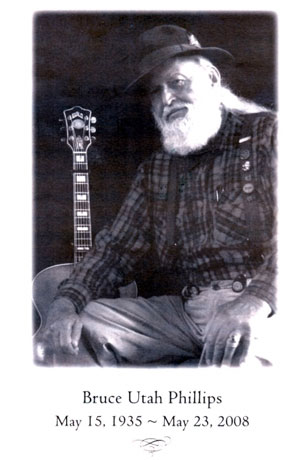
Oodles of channels of 24-hour news, moldering reams of newspapers that will not die, 127 goddamn feeds in my goddamn Google newsreader, and I’m only now finding out that Utah Phillips died sometime last year? —Somebody’s priorities are way the hell out of whack.
Free jazz
Never should have played her that Albert Ayler song.
I knew these things were complicated, but damn.
Complications of Taran: Attack air; Considerable distress; Kill previously deathless Cauldron-born; Kill wizard; Strike down warrior; Suicidal Taran attack. Causes of Taran: Craddoc; Dallben; Article; Lot; Request. Treatments for Taran: Shelter; Companion; Critic Taran Adarsh; Ellidyr; Movie. [via]
I’ve written a screenplay, if you wouldn’t mind taking a look?
In an unexpected development, the pier’s been placed on the Writers’ Guild of America (West) Hotlist for August, 2009.
They fight.
And they do, too. Somewhat. —Just a quick announcement: the thing I was up to for a while there’s now posting: City of Roses No. 7, “Gin-soaked.” Appears M-W-F for the next two weeks. (Also, if you’re already up on what went before, you might find this interesting. Or utterly opaque. Just puttin’ it out there.)
If you ever wondered what it is I sound like,
I read “Bottom Feeding,” by Tim Pratt, for Podcastle.
T-shirts can be decorated with text and/or pictures, and are sometimes used to advertise.

Not to knock Star Trek or nothin’, but Jayne’s T-shirts instantly made the future far more believable than any blandly newage councillor’s gown or ostentatiously homespun Jedi robes. It’s a future that keeps in mind clothing as she is worn: not just ceremonial formalwear and peasant uniforms, but everything in between, the knockabout workaday clothing you catch as you can, adorned with the serendipitious poetics only mass-produced things can provide. Proletarian chic, to re-appropriate a phrase.
I mention this because among the many things the Spouse does well in Dicebox is precisely this sort of practical imagineering: what do you wear when you don’t make your clothing yourself (or have it made for you)? What options are possible in a future of better fabrics and showier printing techniques?
All of which is a long-winded way of saying her ladies wear some fine T-shirts:

Now, the Spouse has done her bit to bring the future into the here-and-now by handrolling her own small-batch runs of T-shirts, but in addition to better fabrics and showier printing techniques, the future will bring us (has already brought) new ways of designing and distributing these quotidian goods. —I mean, basically, all of this has been a long-winded way of saying the Spouse has begun posting designs to Threadless.

You know how it works, right? Sign up for an account, then peruse the available designs; vote up the ones you like, vote down the ones you don’t, and those that are sufficiently juiced get printed as T-shirts and posters which you can then purchase and add to your quiver of mass-produced, knockabout, workaday poetics. And if you’ve ever looked at a page of Dicebox and said damn I want that shirt, add jemale to your watchlist and vote vote vote.
Fun T-shirt facts! A life cycle study of one T-shirt brand shows that the CO2 emissions from a T-shirt is about 4 kilograms (8.8 pounds)—including the growing of the cotton, manufacturing and wholesale distribution. The loss of natural habitat potential from the T-shirt is estimated to be 10.8 square meters (116 square feet).